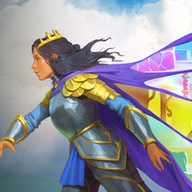
Order of the Sinking Star is a grid-based puzzle adventure. You move one or more characters around a room seen from above, and you solve each puzzle by working out how your characters' powers change the blocks, crystals, mirrors and enemies in front of you. Previews describe it as Sokoban-like: puzzles start simple and escalate quickly into unexpected consequences.
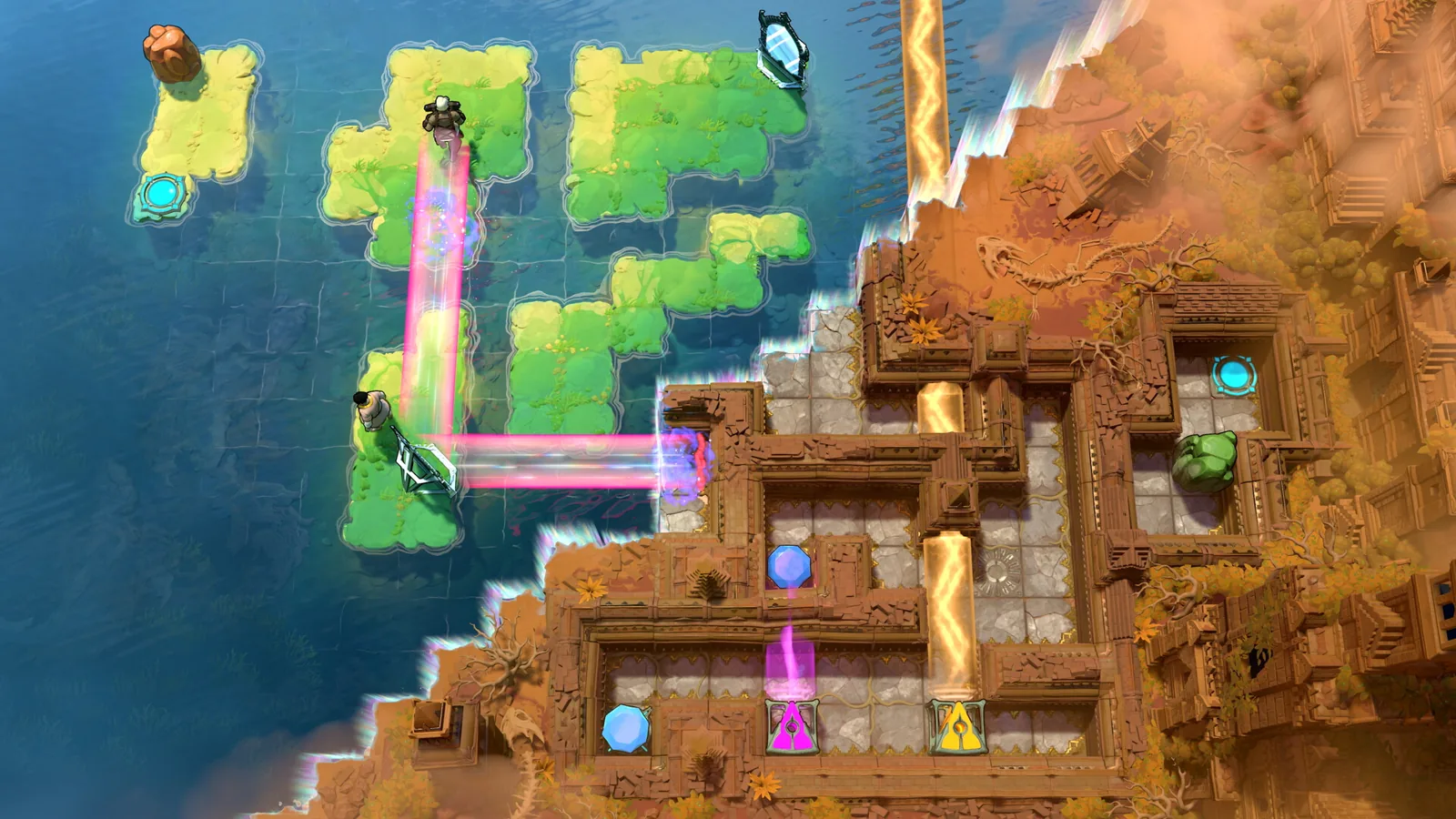
Light beams link grass islands to a sandstone maze. Combining puzzle systems like this is the game's central idea.
The core rules
- Grid-based movement. Rooms are top-down grids, and the PlayStation Blog hands-on describes puzzles that involve pushing blocking objects around grid-like locations.
- No combat. The same report states there is no combat. Enemies are rules to solve around, not opponents to fight.
- Enemies add constraints. Goblins kill a character on an adjacent square. Beasts shoot fire within line of sight. Some gates only deactivate once enemies are defeated.
- 2D first, 3D later. Early puzzles are 2D; later puzzles are 3D, per Wikipedia.
Beginner tips
- Use rewind. A rewind mechanic returns you to an earlier point, and previews say it is essential when a hero's ability leaves you stuck.
- Switch puzzles when stuck. Many puzzles can be tackled in an order you choose, so you can move on and come back.
- Visit the other worlds. The four worlds can be played in any order, and each teaches a different set of rules. See all four worlds.
- Learn each hero's exact power. Valens pushes, Tif pulls, Isidore swaps. Check the heroes and abilities table before assuming a block can move.
- You do not need to solve everything. Multiple endings exist and none require solving every puzzle, according to Jonathan Blow as quoted in previews.
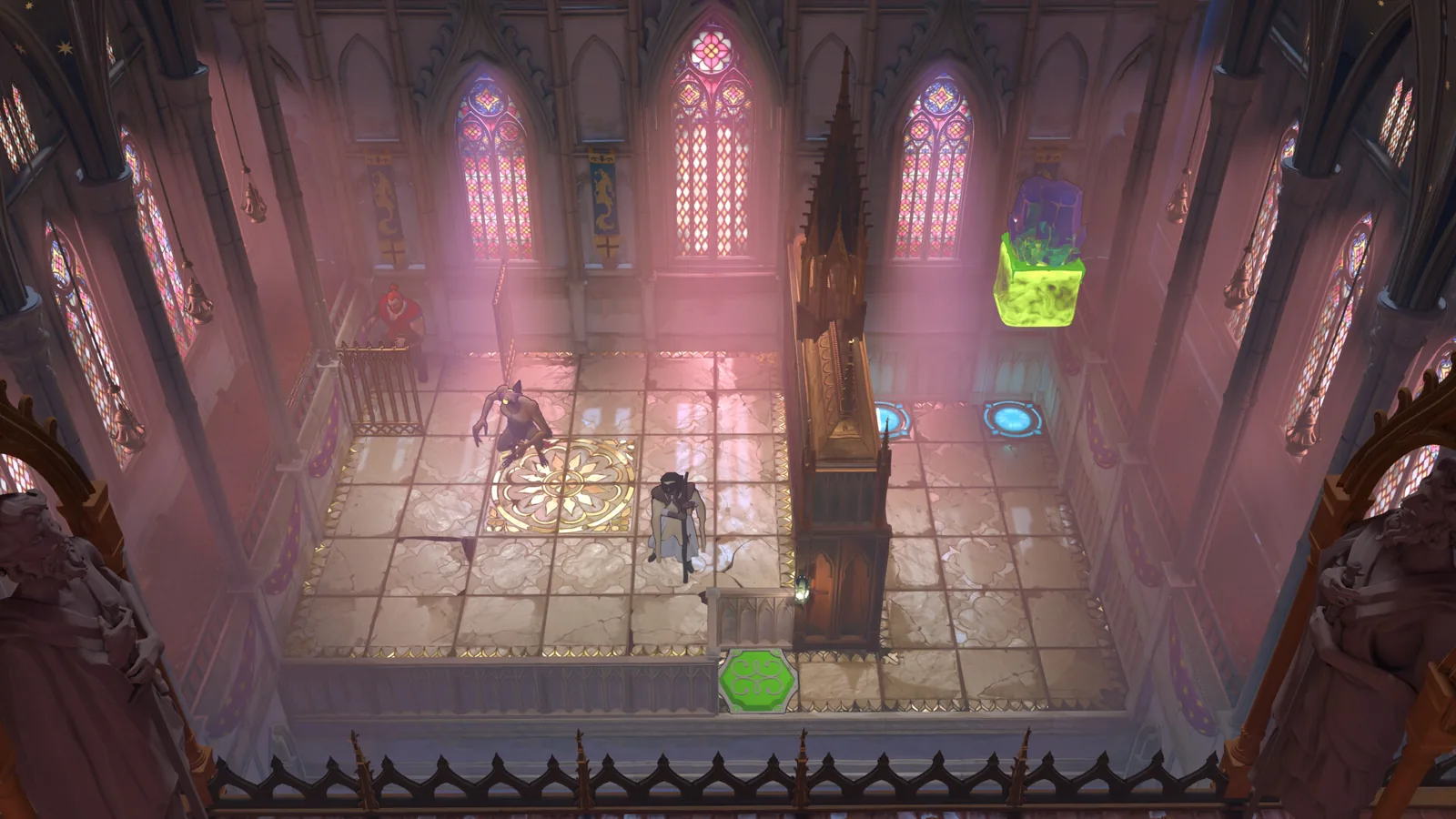
A cathedral room with stained glass. New mechanics are taught inside the areas where they first appear, according to Gamereactor's preview.
Pacing yourself
Blow has said he does not want the game to consume someone's life for months, and the team made efforts to prevent burnout. Gamereactor's preview adds that mechanics are explained in their respective areas, and that progression is designed so you should not be overwhelmed. For how much there is to do, see how long it takes to beat.